Project Overview
A flexible packaging manufacturing facility in Ecuador faced two major operational challenges: high energy costs associated with peak demand during utility peak hours, and production downtime caused by energy rationing and utility instability.
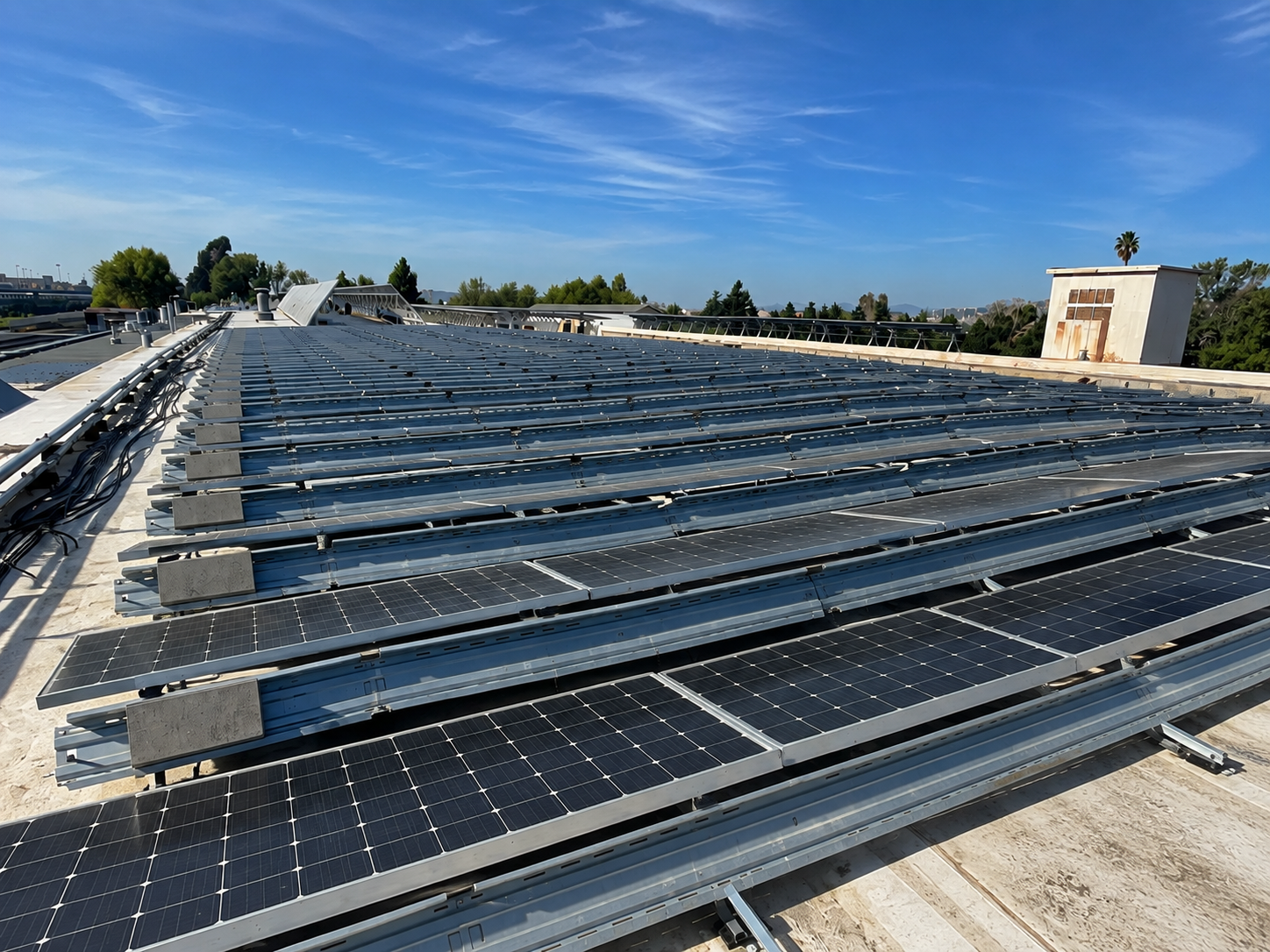
The plant had an existing solar PV system, but it was unable to operate during grid outages, stranding renewable energy generation precisely when it was most needed.
Orange Power Systems engineered a hybrid power control system to synchronize the utility, diesel generation and solar PV, creating a unified microgrid architecture.
System Overview
| Feature | Detail |
|---|---|
| Location | Guayaquil, Ecuador |
| Industry | Flexible packaging manufacturing |
| Application | Peak shaving & Hybrid power |
| Main bus | 3,200 A |
| Voltage | 480 VAC |
| Generation assets | 3 × 600 kW Diesel, 800 kWp Solar PV |
| Utility connection | 1 × 1,500 kVA |
The Challenge
Industrial packaging manufacturing processes consume high amounts of energy, particularly during the heating of extrusion processes.
The utility rate structure heavily penalized consumption during peak hours, but reducing production was not an option. Additionally, the plant lost the ability to use its 800 kWp solar PV system whenever the utility grid went down due to grid-tied inverter constraints.
The requirements included:
- Reducing grid consumption during peak hours without affecting production (Peak Shaving)
- Enabling solar PV generation during power outages by forming a microgrid
- Dynamically managing generator dispatch to avoid under-loading the diesel engines
- Maintaining strict utility zero-export protections
The Solution
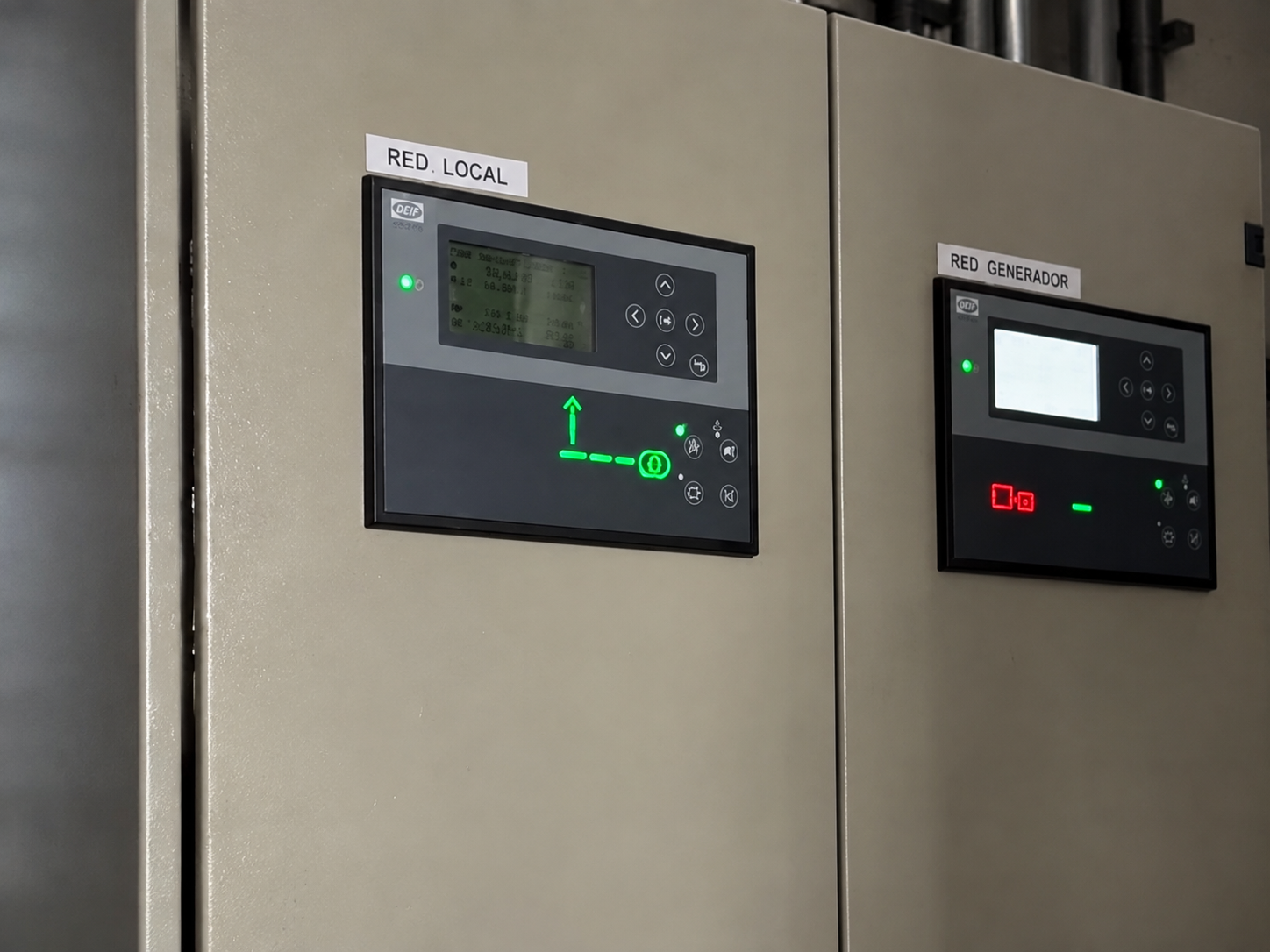
Orange Power Systems engineered a centralized hybrid controller integrated into the plant's main switchgear.
The system included:
- Multi-genset dispatch control (3 × 600 kW)
- Utility synchronization for closed-transitions and continuous peak shaving
- Hybrid controller to manage solar inverter setpoints
- Power metering systems at the utility, generation and solar incomers
- Electrical protection through multi-function relays

How the System Operates
Peak Shaving Mode (Grid-Tied): During peak tariff hours (e.g., 6:00 PM to 10:00 PM), the system automatically starts and synchronizes the necessary generators with the utility grid. The generators assume a calculated portion of the plant's load, ensuring the utility meter never exceeds a pre-set kW limit. Solar power continues contributing to the overall load when available.
Microgrid Mode (Islanded): When the utility fails, the generators start and assume the total plant load. Once the plant is stabilized on diesel power, the controller sends a "Grid Forming" signal to the solar inverters. The solar PV comes back online, reducing the required fuel. If the load drops or solar output increases to a point where the generators would be severely under-loaded, the controller automatically curtails the solar inverter setpoints to protect the diesel engines.
Scope of Work
- Hybrid control system architecture
- Control and automation panel fabrication
- Solar inverter communication integration (Modbus TCP)
- PLC logic for power dispatch sequences
- SCADA and HMI configuration
- Factory (FAT) and Site Acceptance Testing (SAT)
Results
- Energy cost reduction — Peak hour penalties were eliminated by hard-capping grid consumption automatically.
- Solar resilience — The 800 kWp PV system now operates during grid outages, significantly reducing diesel fuel consumption.
- Seamless operation — Closed transitions with the utility allow synchronization without dropping the plant.
- Asset protection — Dynamic load management protects the diesel generators against prolonged light-loading.